
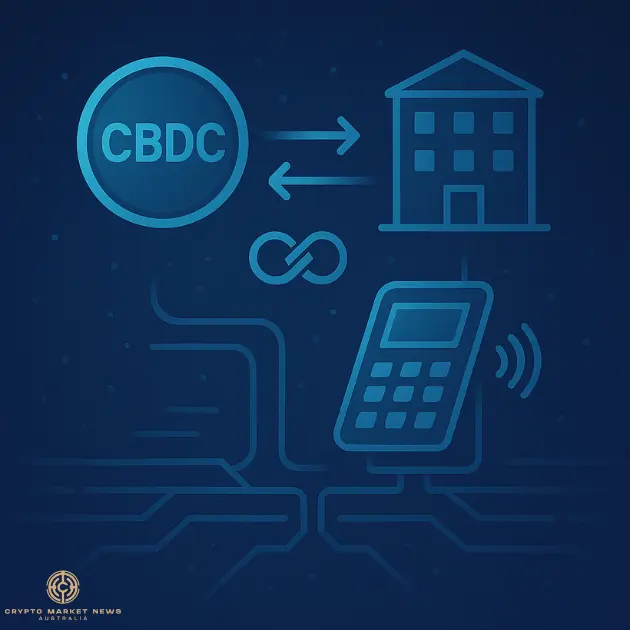
Crypto news is a comprehensive space. There are several niche spaces that different demographics follow, with crypto prices being perhaps the most prominent. But there is another aspect of the digital asset space that is garnering more and more attention: Central Bank Digital Currency or CBDC.
We are already familiar with digital currencies like Bitcoin, Ripple, Ethereum, etc., not to mention the various stablecoins on the market. Following the same line of thought, CBDCs are attempting to bridge the gap between traditional fiat currencies and the growing digital currency marketplace.
What is CBDC?
To put it simply, CBDCs are essentially digital versions of the traditional currencies issued by that country’s central bank. An entity like the Bank of England (BoE) would be a good example of a centralised bank. CBDCs are meant to be legal tender in digital form, usable for payments and in a variety of transactions. To put it even more simply, CBDCs are the governments’ answer to cryptocurrencies.
Within the CBDC space, there are two primary forms: retail and wholesale. Retail CBDCs are completely accessible by both businesses and the public, serving as a digital alternative to hard cash. Wholesale CBDCs, meanwhile, are used for transactions exclusively between financial institutions like credit unions, banks, and insurance companies.
The CBDC space has already seen exponential growth. Jamaica, Nigeria, and The Bahamas became the first three countries to formally introduce CBDCs. Additionally, there are 134 countries and currency unions, like the Eurozone and China, that are actively exploring the potential of CBDCs. A whopping 68 countries are reportedly in the “advanced phase of development, pilot, or launch”.
How CBDCs are Different from Crypto
Before understanding the complexities and impact of CBDCs, it helps to know how they are different from cryptocurrencies. The latter has more than 420 million global users, posing a major and influential impact within the global economic space. Given that fact, it only makes sense that governments would attempt to capitalise with their own state-owned variations.
At their core, both are digital currencies. That said, their regulatory framework and underlying architecture are different. For starters, the goal of a central bank in terms of digital currencies is to blend those digital currencies with the traditional standard of fiat currencies. CBDCs are regulated and have legal frameworks that must be stringently adhered to. Crypto regulation, meanwhile, varies from jurisdiction to jurisdiction. Some countries have little to no regulation currently in place.
The value of CBDCs is tied to the value of those traditional fiat currencies, including the euro or US dollar. This makes them far more stable than your average cryptocurrency, which tends to be known for their price volatility. It is expected that the increased stability will be appealing to risk averse investors who avoid things like crypto or stocks.
CBDCs are also required to comply with existing financial regulations. Know-your-customer (KYC) and anti-money laundering (AML) requirements must be met at every stage. Cryptocurrencies, meanwhile, often operate with weaker protections and in a regulatory “grey area”.
Current CBDC Pilot Programs
As mentioned previously, there are a number of countries and central banks currently running their own CBDC pilot programmes. These programmes are meant to test the potential of introducing a CBDC. They can vary in scope, with some being retail pilots and others being wholesale.
These programs explore a litany of use cases like tokenised assets and cross-border payments. The largest global pilot programme is China’s digital yuan programme. India, Australia, the European Union, and Switzerland all have their own CBDC pilot programmes happening now or in 2026.
Takeaways
There are several key takeaways from the rollout of these pilot programmes. For starters, they are in various stages globally. Some are simply in the research phase, while others have already launched full-scale public pilots.
Perhaps the most important thing to consider is that each rollout is different. Some have a retail (public) focus, while others have a wholesale (business) approach. Cross-border testing is a focal point across the board, with organisations like the Bank for International Settlements (BIS) being involved in several cross-border pilots, testing interoperability between a variety of national CBDCs.
Positive Impacts of CBDCs on Merchants and Consumers
There are a couple of primary benefits when it comes to consumers and merchants and their relationship with CBDCs. The more traction they gain globally, the more impact these will have on consumers and merchants.
For starters, CBDCs offer a potentially streamlined payment processing method for both consumers and merchants. Because transactions would occur digitally and use currencies backed by central banks, there would no longer be the need for intermediaries. That means potentially lower transaction fees, not to mention faster settlement times, enhanced liquidity, and reduced operating costs for merchants, all of which leads to even more efficient operations.
There is also the matter of accessibility. CBDCs offer the potential for greater financial accessibility and inclusion. Being backed by a central bank legal tender, CBDCs will provide individuals with the ability to participate in the digital economy without traditional banking access. That means potentially new markets for merchants, allowing them to reach larger demographics and potentially expand their customer base.
Challenges with CBDCs for Consumers and Merchants
While there are several benefits to be had, nothing is ever perfect. The adoption of CBDCs presents a number of considerations and challenges across the board. Privacy is perhaps the biggest issue since transactions done through CBDCs could be subject to greater surveillance and monitoring by centralised authorities.
Consumers and merchants will also have to adapt to advancements when it comes to digital payments. Merchants will no doubt need to invest in an updated payment structure and implement technologies that can support CBDC transactions. Consumers, on the other hand, will need to become familiar with CBDC-enabled payment methods like digital wallets.
Merchants will also face challenges in making it simple for consumers to use CBDC payment options. With more and more payment methods emerging, merchants are required to quickly adapt to new technologies without it having an impact on day-to-day operations. Orchestration platforms are necessary to create as seamless an integration of new features as possible.
Public trust and acceptance are also major challenges. Until infrastructure can be hammered out, not to mention regulation adoption, public perception of CBDCs will likely be spotty, at best. The most proactive merchants offer a variety of payment methods, but greater challenges with adoption and public trust may prevent them from ultimately integrating new payment methods into their accepted daily options.
Conclusion
If anything, the implementation of CBDCs feels like a natural progression within the digital assets space. It also provides a measure of stability, protection, and reliability for both users and businesses alike.
For now, the focus will be on developing these CBDC pilot programmes before ultimately rolling them out to the public. From there, we can get a better idea of how these stablecoins perform and how they are implemented in everyday transactions.


