
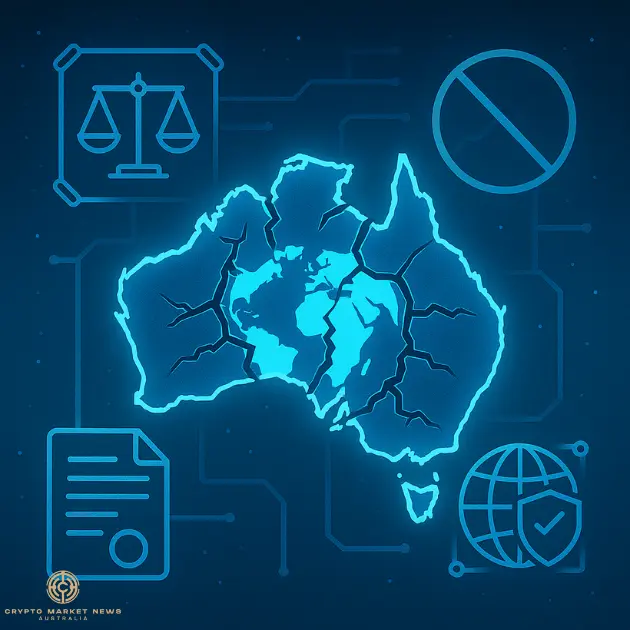
The Financial Stability Board (FSB) recently called for a unified approach to cryptocurrency. The G20 watchdog said that there were “significant gaps” in governments’ efforts to regulate cryptocurrencies, which could pose a threat to the financial stability of the digital asset ecosystem.
“Implementation progress remains incomplete, uneven and inconsistent,” said Arthur Yuen, Deputy Chief Executive of the Hong Kong Monetary Authority and chair of the FSB review team. “This creates opportunities for regulatory arbitrage and complicates oversight of the inherently global and evolving crypto-asset market.”
The Board has urged member countries to adopt its 2023 Global Regulatory Framework for Crypto-Asset Activities, but implementation timelines vary widely.
A global System Still Divided
The FSB’s latest review follows two years of intensive regulatory activity from major crypto markets, including the US, the EU, Australia, and Japan.
Following the inauguration of Donald Trump, the US has started embracing cryptocurrency, with one piece of digital asset legislation already signed into law and another currently working its way through Congress.
The SEC has also departed from “regulation by enforcement” as Congress looks to offer clarity with the aptly named CLARITY Act.
The US joins the EU, which is in the process of implementing its Markets in Crypto-Assets (MiCA) regulation to bring transparency and consumer protection to the digital economy.
But while this is happening in most Western nations, many in the developing world are yet to take action. An even bigger problem is that countries implementing crypto laws have taken very different routes.
“Implementation across jurisdictions remains partial,” said the FSB “Jurisdictions continue to diverge in key areas such as the definition of crypto-assets, the treatment of stablecoins, and the oversight of service providers.”
For instance, while the EU has rolled out comprehensive licensing frameworks, the U.S. continues to rely on legacy securities and commodities laws.
This approach has led to crypto projects being defined differently in different countries, making harmonised enforcement impossible.
This fragmented approach, the FSB warns, has created a situation where companies move their operations to the most lenient jurisdictions.
MiCA and its Limits
Europe’s MiCA framework provides exchanges and wallet providers with clear licensing requirements and sets standards for stablecoin issuance while also mandating consumer disclosures.
However, as ESMA Chair Verena Ross noted recently, member states are interpreting implementation differently, particularly in relation to licensing and cross-border custody. This has resulted in France, Italy, and other large markets calling for centralised oversight by ESMA.
Asia-Pacific Regulatory Divergence
Asian markets have taken widely divergent approaches to crypto regulation. Japan and Singapore have adopted strict frameworks that require high transparency from crypto companies. Unlike many emerging markets in East Asia, the two countries rarely grant full licences to exchanges, and when they do, it’s after a thorough investigation.
Japan’s FSA requires firms to separate customer funds from their own. Additionally, the agency requires crypto firms to maintain capital buffers, just like traditional financial institutions. These requirements helped the Japanese avoid the heavy losses experienced by investors in most other countries during the 2022 downturn.
Singapore, meanwhile, has sought to strike a balance between investor protection and the country’s ambition to remain a hub for financial innovation in the Asia Pacific.
Australia has also joined its neighbours in regulating its crypto sector by unveiling a draft legislation on digital platforms. The Albanese government says that the bill seeks to protect investors by rooting out fraudulent issuers and crypto-asset service providers.
The “Threat” Posed by Stablecoins and DEFI
One of the FSB’s most pointed warnings concerns stablecoins, which it says pose a threat to monetary sovereignty or financial stability. Yet, very few jurisdictions have fully integrated the watchdog’s recommendations.
“Gaps remain in addressing financial stability risks, and few have finalised regulatory frameworks for global stablecoin arrangements,” wrote Bank of England Governor and Chair of FSB Andrew Bailey. “Uneven implementation creates opportunities for regulatory arbitrage and complicates oversight for an inherently globally interconnected market.”
In addition to stablecoins, the FSB says that DeFi poses a big challenge to global financial stability. DeFi projects mimic traditional financial services, allowing customers to lend and borrow liquidity. The board warns that the decentralised nature of DeFi makes it challenging for regulators to provide the necessary oversight.
The Cost of Fragmentation
The current fragmented landscape makes it harder for national regulators to protect consumers and enforce AML laws. It also makes it difficult to track illicit flows in cross-border transactions. According to Chainalysis, $40.9 billion in cryptocurrency transactions in 2024 were sent to fraudulent addresses.
The cost isn’t borne by national regulators alone. Firms also suffer from increased compliance costs due to the differences in licensing, tax, and disclosure requirements.
FSB Continues to Push for Coordinated Oversight
The FSB states that although several countries have expressed willingness, only a few have followed its regulatory guidance so far. But the Board’s calls for coordinated oversight have only grown louder.
The watchdog is pushing for stronger collaboration with the International Organisation of Securities Commissions (IOSCO), the IMF, and the Basel Committee on Banking Supervision to close loopholes.
“We are now seeing real momentum towards global coordination,” said Dante Disparte, chief strategy officer and head of Global Policy and Operations at Circle.
But even as momentum builds, the road to uniform global oversight remains a long one. Whether these efforts by the FSB will be successful, only time will tell.